In just 12 hours, the safety market across the NFL shifted dramatically as teams reacted to a sudden ripple effect triggered by roster positioning.
Everything began when the Houston Texans unveiled a championship-caliber roster blueprint for 2027, tightening the supply of elite defensive talent across the league.
That unexpected scarcity at the safety position immediately placed pressure on teams searching for young defensive anchors capable of making an instant impact.
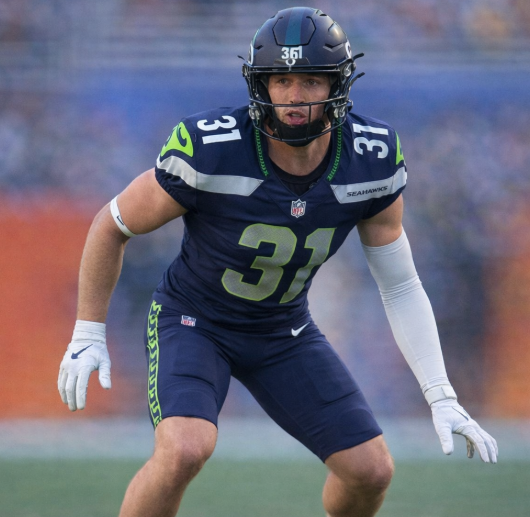
In that context, Dillon Thieneman quickly emerged as one of the few prospects with the tools to transform a defense from day one.
The Seattle Seahawks originally planned to focus heavily on offense in Round 1 to support their evolving system and offensive identity.
A true No. 1 wide receiver and offensive line upgrades were viewed as top priorities to elevate consistency and scoring efficiency.
However, as the safety market tightened rapidly, the front office was forced to reassess its entire draft strategy through a long-term lens.
This decision was no longer about filling offensive gaps, but about capitalizing on rare defensive value that might not be available again.
Thieneman offers a nearly complete profile, combining elite athleticism with high-level instincts that define modern defensive playmakers.
During his time in the Big Ten Conference, he recorded six interceptions in 12 games as a true freshman, signaling immediate impact.
Across three collegiate seasons, he averaged over 100 tackles per year, showcasing elite range, durability, and consistent production.
In his most recent season at Oregon, he posted a 91.0 PFF grade, ranking among the top defensive backs in the nation.
His missed tackle rate of just 8.3 percent and forced incompletion rate of 17.2 percent highlight elite efficiency and discipline.
At the NFL Combine, he ran a blazing 4.35-second 40-yard dash and recorded a 41-inch vertical, confirming rare athletic upside.
These metrics point toward a ceiling that could quickly elevate him into Pro Bowl discussions early in his career.
Meanwhile, the Seahawks continue to evaluate long-term stability in the secondary, where elite youth and upside remain critical.
Despite roster strength, the need for a young cornerstone defensive presence remains a priority for sustained success.
Thieneman provides exactly that, combining play recognition, sideline-to-sideline range, and the ability to generate turnovers consistently.
Passing on offense in Round 1 may appear unconventional, but under these conditions, it becomes a calculated strategic move.
This is no longer about immediate needs, but about securing a rare defensive asset with long-term franchise impact.
If this scenario unfolds, the Seahawks could walk away with a foundational defensive star ready to shape their future.
And in a draft filled with uncertainty, players like Thieneman represent opportunities that can redefine a franchise’s trajectory.