"Don't touch that piano."
The words cracked across the ballroom.
Sharp.
Violent.
Humiliating.
Three hundred guests turned at once.
Crystal chandeliers shimmered overhead.
Champagne glasses froze halfway to lips.
A fifteen-year-old boy stood beside a black Steinway.
Busboy uniform.
Wrinkled sleeves.
Soap stains on his cuffs.
His hand hovered above a single key.
"I wasn't trying to—"
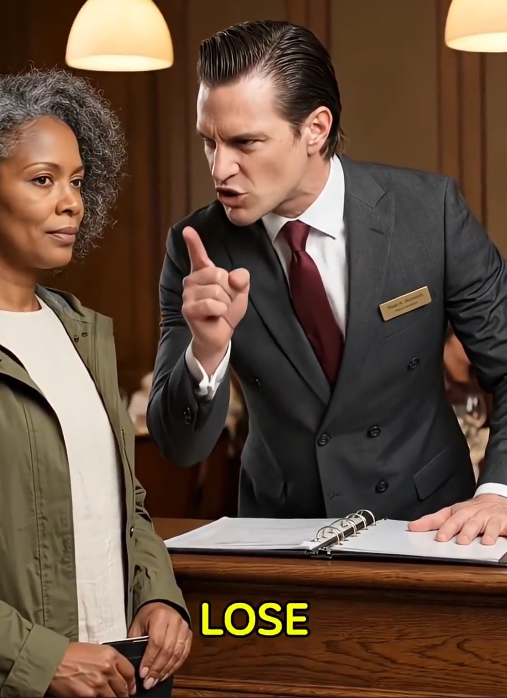
"Shut your mouth."
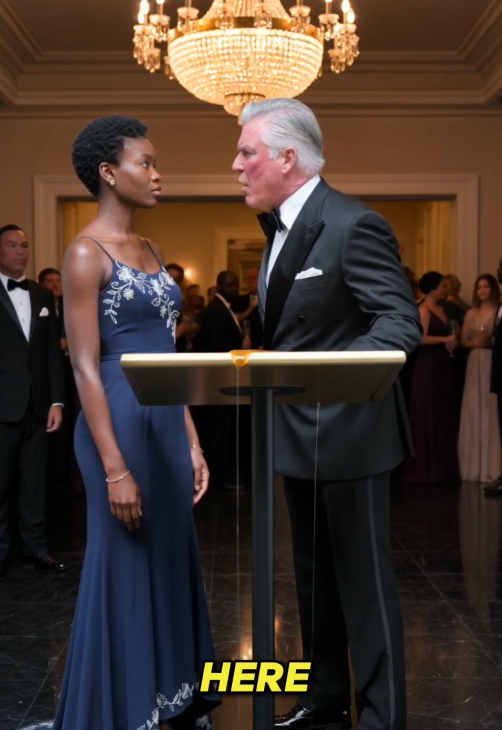
Gerald Ashworth stepped forward.
Sixty years old.
Two hundred million dollars.
A reputation built on making people feel small.
"You think this is yours?"
His voice rose.
"Do you have any idea what that piano costs?"
The boy lowered his eyes.
"No, sir."
"Two hundred thousand dollars."
Gerald sneered.
"And you thought your filthy hands belonged on it?"
A few nervous laughs drifted through the room.
The boy stayed silent.
That somehow made Gerald angrier.
He snatched a linen napkin from a nearby table.
Threw it into the boy's chest.
"Clean every key."
"Every single one."
The napkin slid to the floor.
Nobody moved.
Nobody spoke.
The musicians looked away.
The waiters looked down.
The boy bent slowly to pick up the napkin.
Then Gerald stepped closer.
Close enough to whisper.
Close enough to hurt.
"Nobody ever taught you where you belong."
"So let me."
He pointed toward the kitchen doors.
"Back there."
"That's where people like you stay."
The room went quiet.
Painfully quiet.
Then came another sound.
A voice.
Old.
Strong.
Unexpected.
"Let the boy play."
Heads turned upward.
A lone figure stood on the mezzanine balcony.
Silver hair.
Dark suit.
Hands gripping the railing.
The room recognized him instantly.
Gasps spread.
Whispers followed.
"No way..."
"That's him."
"It can't be."
Philip Hollander.
The legend.
Carnegie Hall.
Vienna.
Berlin.
La Scala.
A man whose name belonged in history books.
Gerald forced a smile.
Trying to save face.
Trying to stay in control.
"If the maestro wants entertainment..."
He gestured toward the piano.
"Fine."
Then he looked at the boy.
Cold.
Cruel.
Mocking.
"Go ahead."
"Show us."
The crowd chuckled.
Some already reaching for their phones.
Ready to record the embarrassment.
Ready to watch a poor kid fail.
The boy walked slowly toward the bench.
No anger.
No fear.
No excuses.
He sat.
Adjusted the seat.
Placed both hands above the keys.
Then stopped.
One breath.
Just one.
The ballroom held its breath with him.
Then—
The first note.
Soft.
Perfect.
The room changed.
A woman lowered her glass.
A waiter forgot to move.
A conversation died mid-sentence.
The second phrase followed.
Then another.
Chopin.
Ballade No. 1.
Not merely played.
Understood.
Every note carried weight.
Every pause carried pain.
The boy disappeared.
Only the music remained.
Gerald's smile vanished.
The guests leaned forward.
Phones slowly lowered.
Nobody wanted a screen between themselves and what was happening.
By minute two...
People stopped blinking.
By minute three...
Someone was crying.
By minute four...
Even the string quartet stood motionless.
Philip Hollander closed his eyes.
Listening.
Not as a celebrity.
Not as a legend.
As a student.
As a man hearing something rare.
Something extraordinary.
The final Chopin passage arrived.
Fast.
Violent.
Beautiful.
Then—
Silence.
The room exploded.
Applause.
Thunderous.
Uncontrolled.
People stood.
One after another.
A standing ovation.
But the boy didn't stand.
Didn't bow.
Didn't smile.
Instead...
He started playing again.
A new melody.
Unknown.
Original.
The room quieted instantly.
"What is that?"
Someone whispered.
The melody grew.
Gentle.
Heartbreaking.
A story without words.
A childhood.
Loneliness.
Dreams.
Loss.
Hope.
Every note felt personal.
Every chord felt alive.
The music reached places language couldn't.
A woman covered her mouth.
A businessman wiped away tears.
Gerald stared.
Frozen.
Because he suddenly understood.
This wasn't talent.
This was genius.
When the final note faded...
Nobody moved.
Nobody dared.
The silence lasted ten seconds.
Then twenty.
Then Philip Hollander slowly descended the staircase.
One step at a time.
The entire ballroom parted for him.
He walked directly to the piano.
The boy stood.
Unsure.
Nervous for the first time all night.
Philip stopped in front of him.
The room waited.
Then the maestro did something nobody expected.
He bowed.
To the boy.
The ballroom gasped.
Gerald's knees nearly buckled.
Philip's voice cracked.
"What is your name?"
The boy swallowed.
"Ethan."
"Ethan what?"
"Ethan Brooks."
Philip nodded slowly.
Then smiled.
A tear escaped his eye.
"I've spent sixty years searching for music like that."
The room stood frozen.
Philip reached into his jacket.
Pulled out a gold card.
Placed it on the piano.
"My conservatory."
"My foundation."
"My personal mentorship."
"Effective tonight."
He paused.
Looking directly at Ethan.
"You never clean another table again."
The ballroom erupted.
Applause.
Cheers.
Disbelief.
Ethan's hands trembled.
Not from fear.
From relief.
Years of practicing in church basements.
Years of borrowed keyboards.
Years of being invisible.
Seen.
Finally seen.
Then Philip turned toward Gerald.
The room instantly quieted.
Gerald looked away.
Unable to meet his eyes.
Philip's voice became ice.
"You saw a busboy."
"I saw a future legend."
"You judged his uniform."
"I listened to his soul."
Gerald couldn't speak.
Not a single word.
Because he knew.
Everyone knew.
The richest man in the room had been the poorest judge of character.
One year later...
Ethan Brooks performed at Carnegie Hall.
The youngest featured soloist in decades.
The concert sold out in hours.
Millions watched online.
When the performance ended...
The audience rose as one.
Standing.
Cheering.
Crying.
And in the front row sat Philip Hollander.
Smiling.
Proud.
Beside him was one empty chair.
A reminder.
A reminder of the night a boy was told he didn't belong.
And proved he belonged more than anyone else in the room.
Because talent can be ignored.
Opportunity can be denied.
Doors can be closed.
But greatness...
Finds a way to be heard.
Eventually.
By everyone.